Launch offer — valid today only

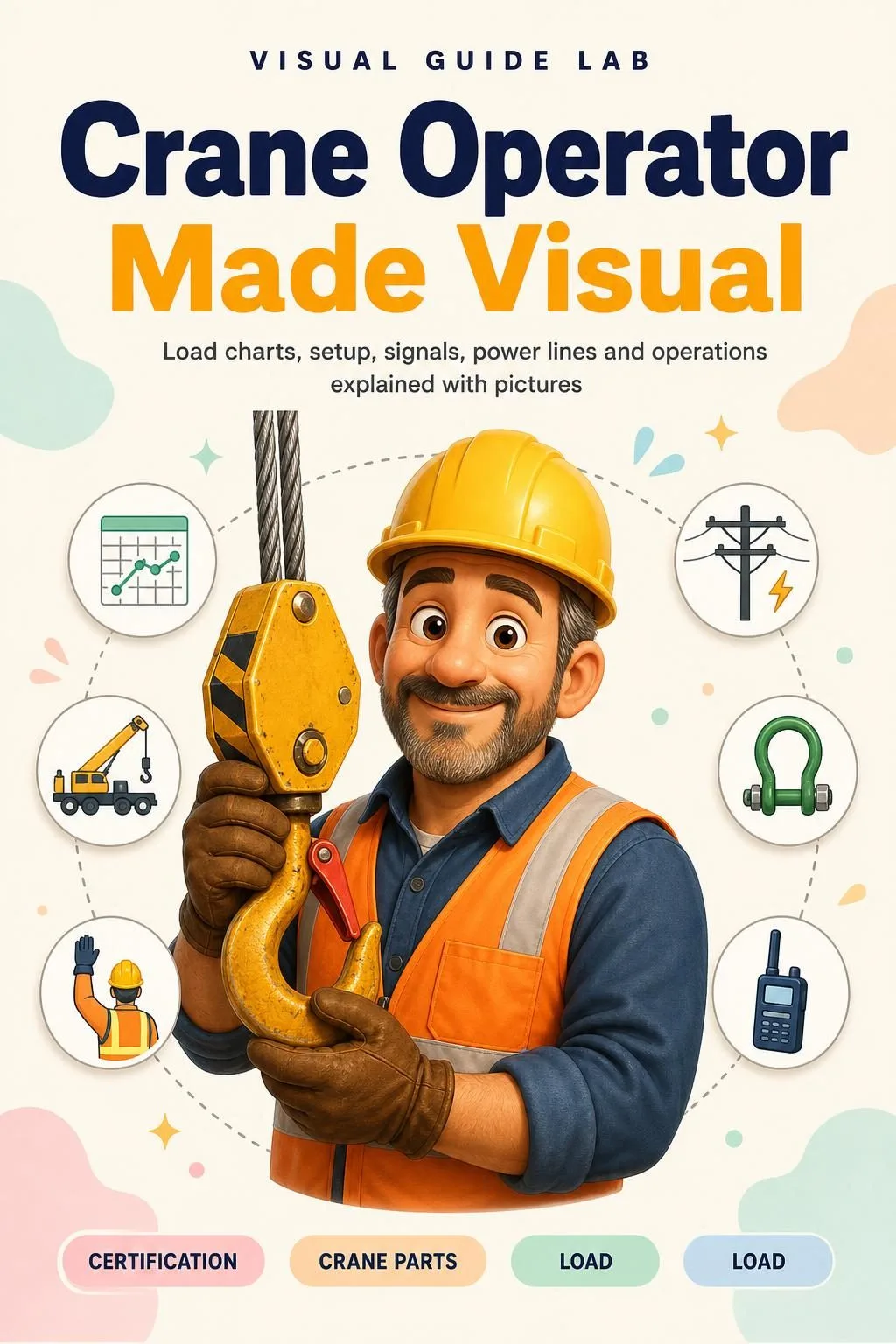
The NCCCO Mobile Crane Written Exams, One Topic per Page With the Load Charts Worked Out Step by Step!

Radius, gross and net capacity, deductions, parts of line, setup, hand signals and power lines: most manuals bury them in walls of text and grids of numbers. Here each topic fits on one page, with a drawing and the key points to remember. 86 illustrated pages.

YES, I WANT THE ILLUSTRATED GUIDE

🔒 Secure checkout · PDF by email · 30-day guarantee

One topic per pagethe drawing shows you the rule and the text backs it up
86 illustrated pages9 parts, from certification rules to exam practice
Up-to-date sourcesOSHA 1926 Subpart CC, ASME B30.5 and the CCO exam outlines

This Is What the Pages You Will Study Look Like

One topic per page: a drawing that shows how it works, plus boxes with what you need to know:

OSHA 1926.1427: certified by an accredited program + evaluated by the employer
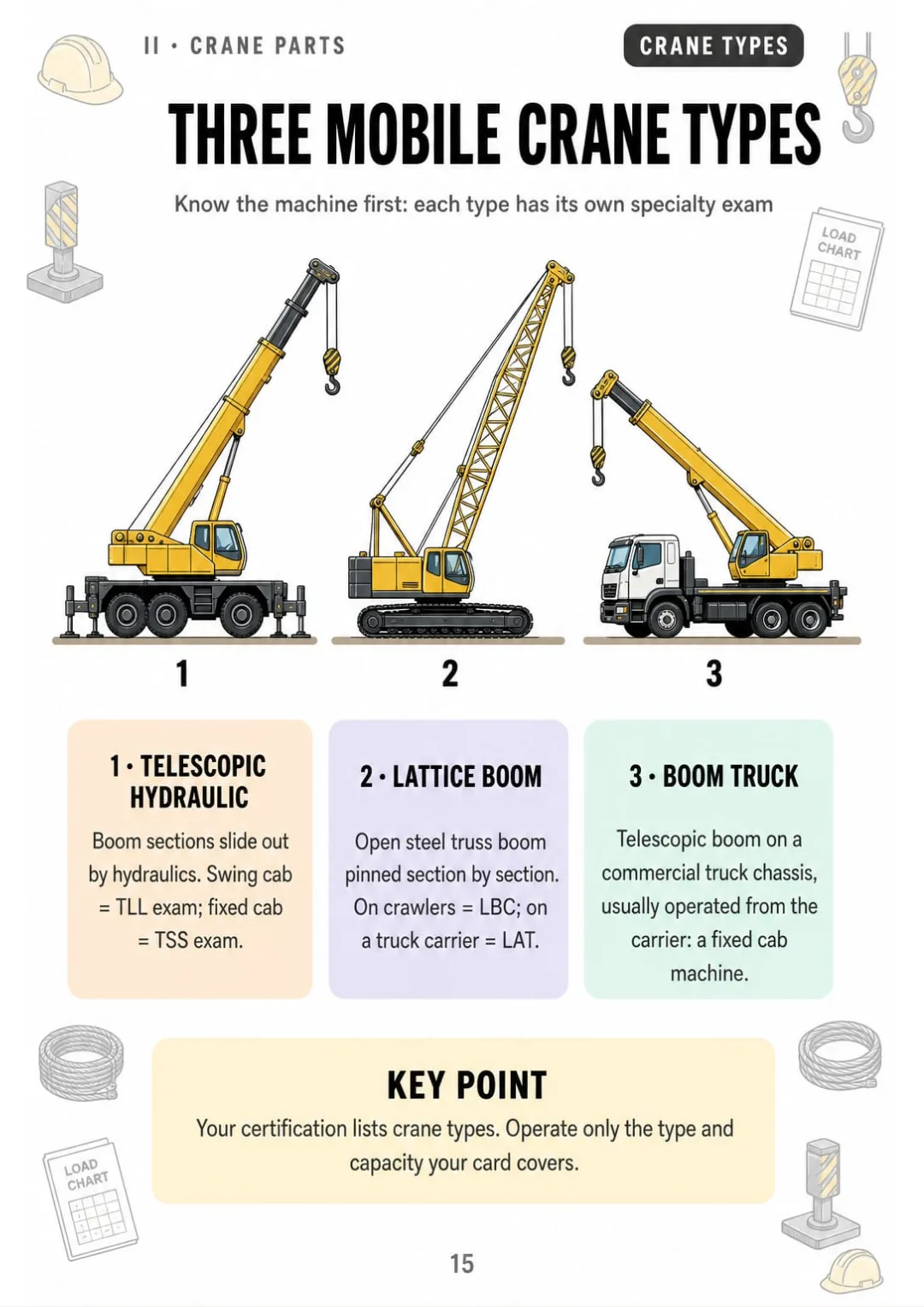
Telescopic (TLL/TSS), lattice (LAT) and boom truck, side by side at the same scale.
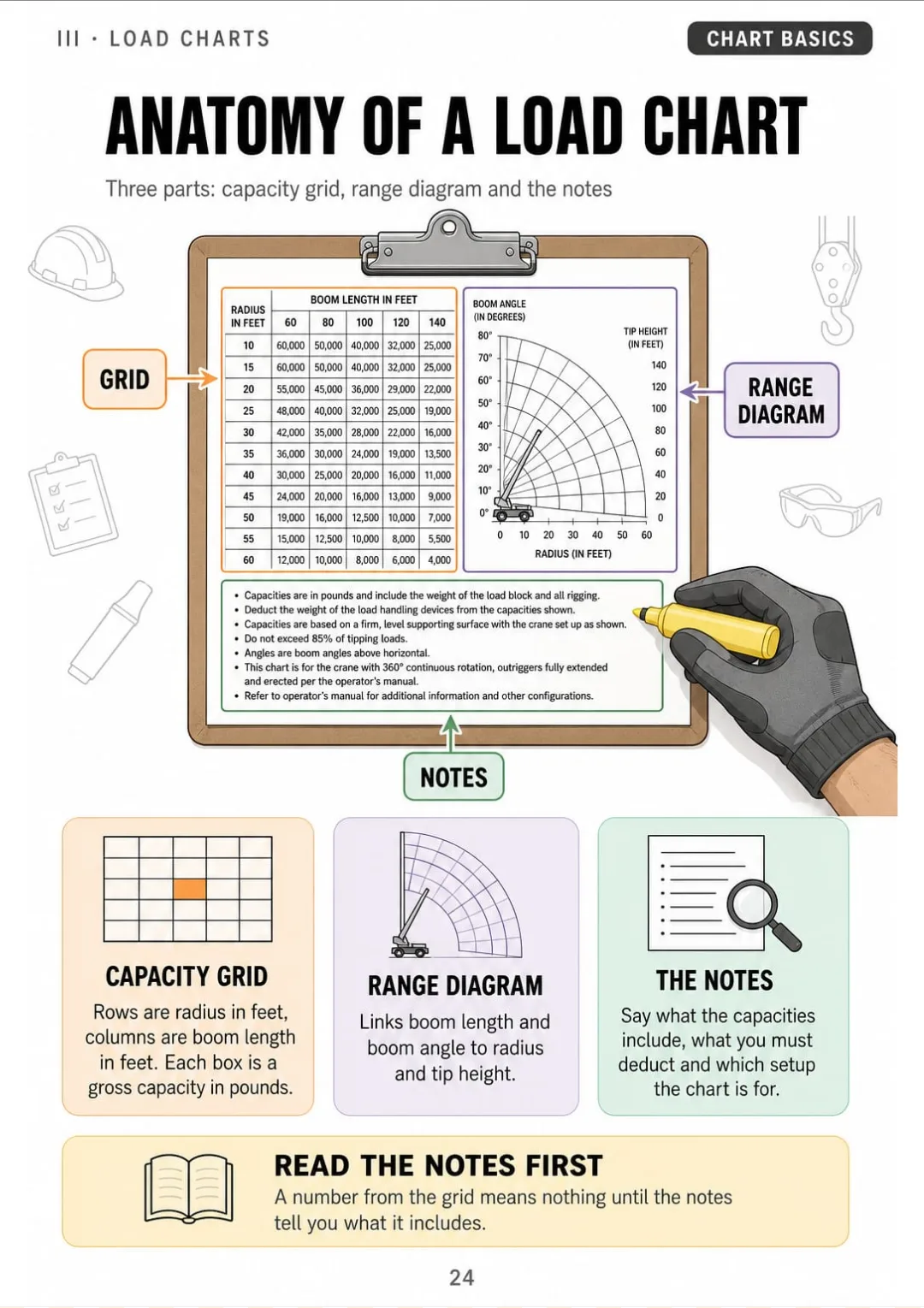
Capacity grid, range diagram and notes: the three parts of every load chart
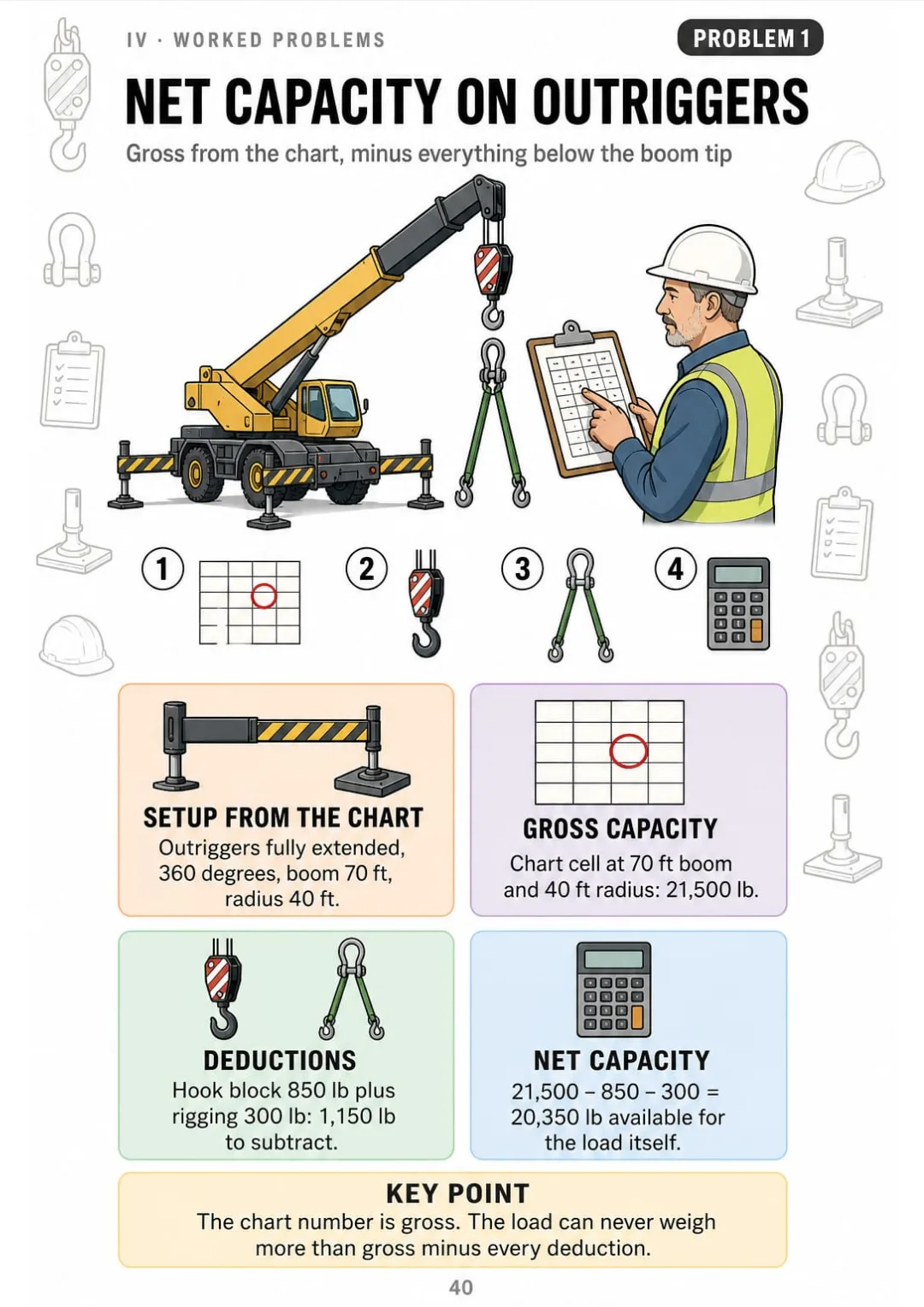
21,500 lb gross − 850 lb block − 300 lb rigging = 20,350 lb net
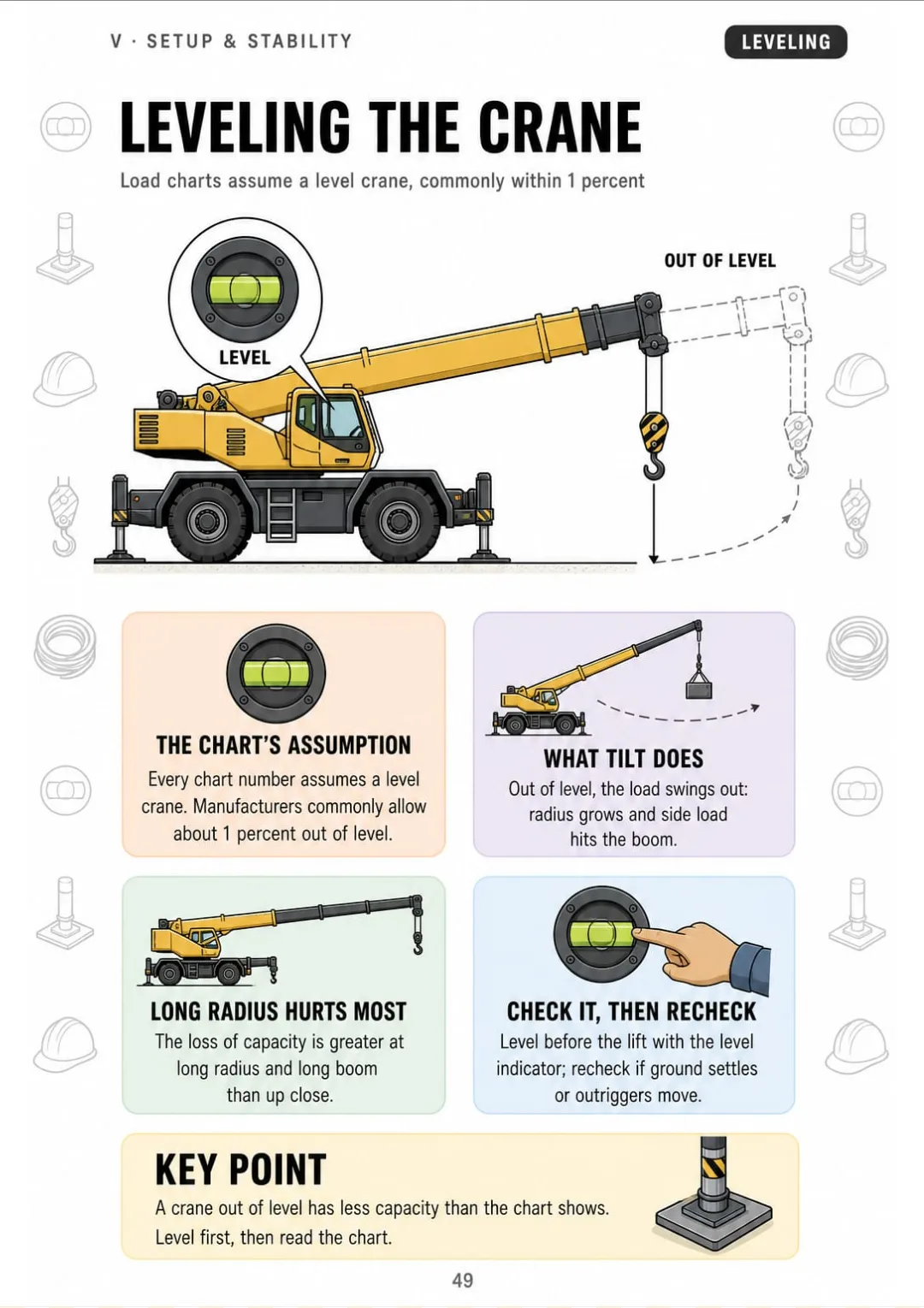
Charts assume a level crane, commonly within 1 percent; tilt costs most at long radius.
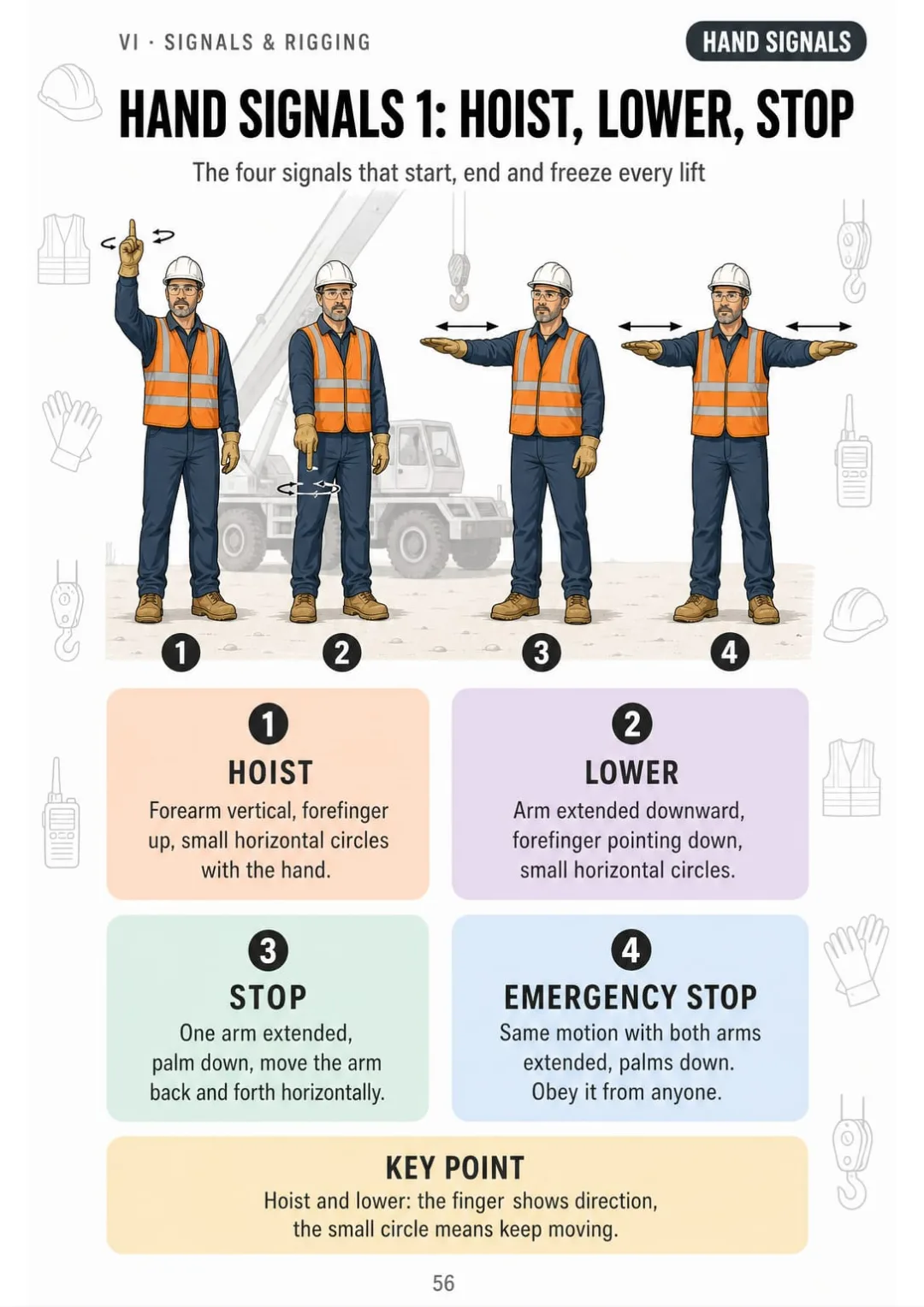
Hoist, lower, stop, emergency stop: the four ASME B30.5 hand signals, drawn and numbered
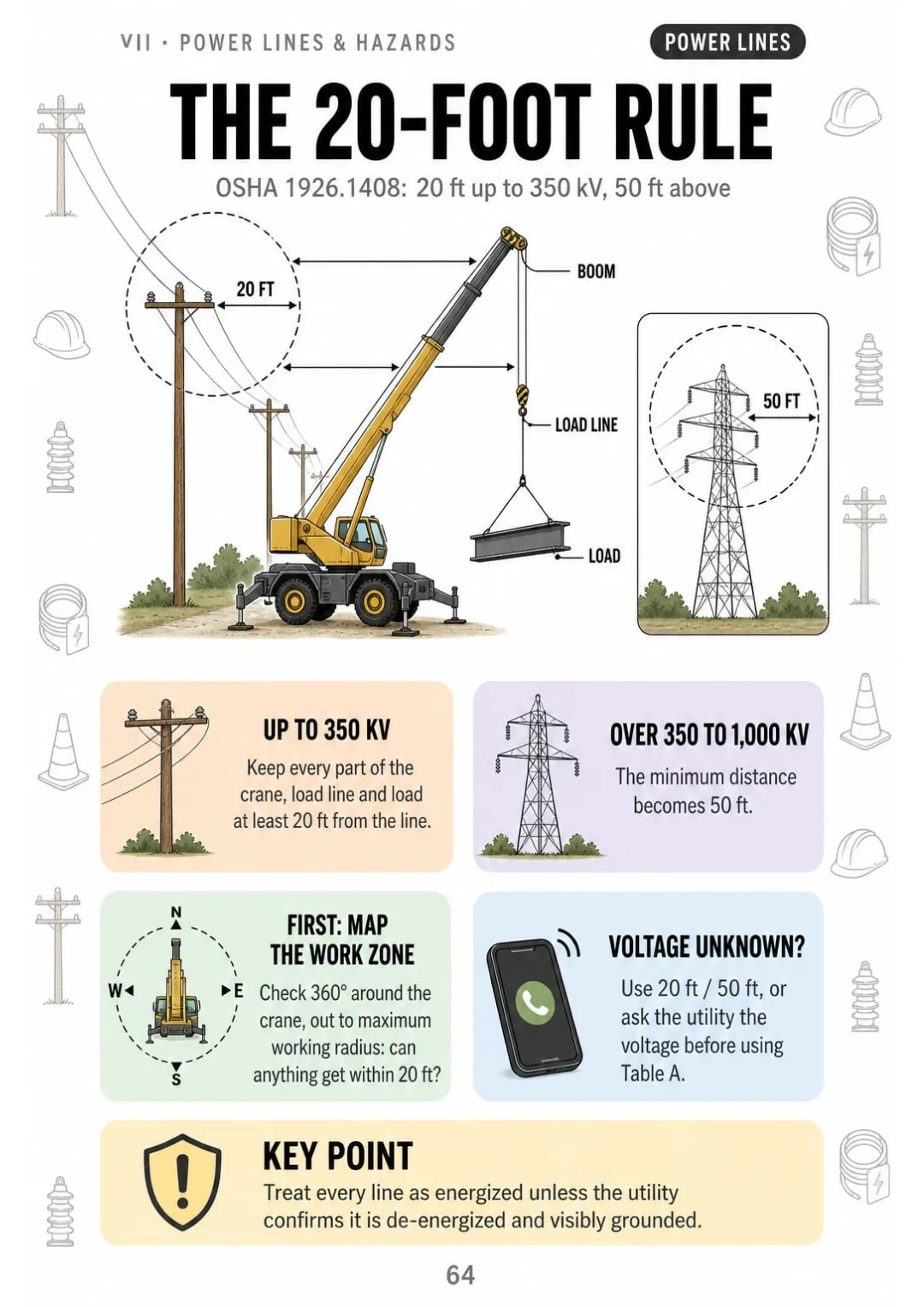
OSHA 1926.1408: 20 ft up to 350 kV, 50 ft from 350 to 1,000 kV — crane, load line and load.
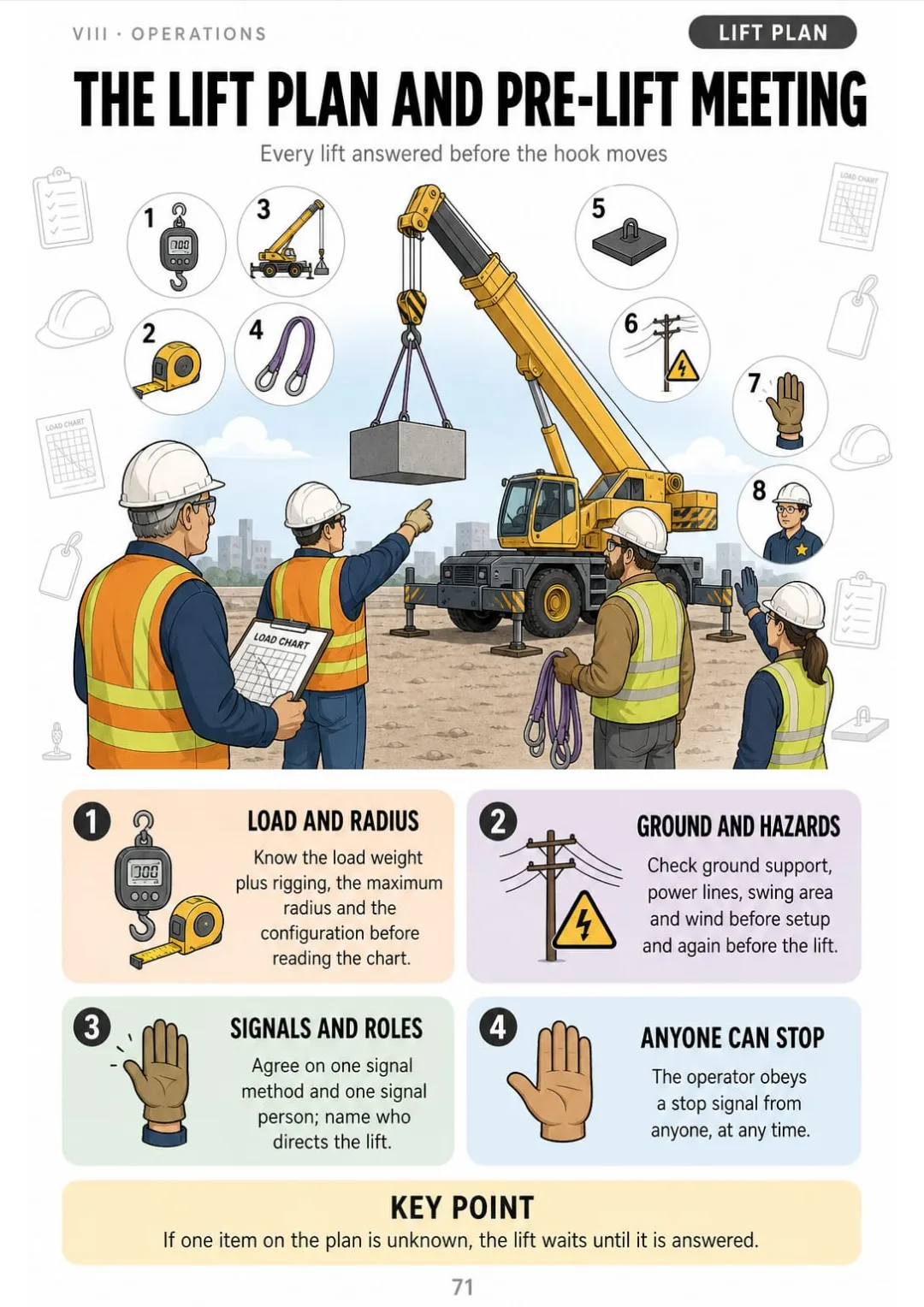
Load, radius, configuration, rigging, ground, power lines, signals, lift director: reviewed with the crew.

Swipe to see more →

These are real pages from the book. The table of contents is the full one: 9 parts and 81 topics.

It's Not the Math. Nobody Ever Showed You How to Read the Chart.

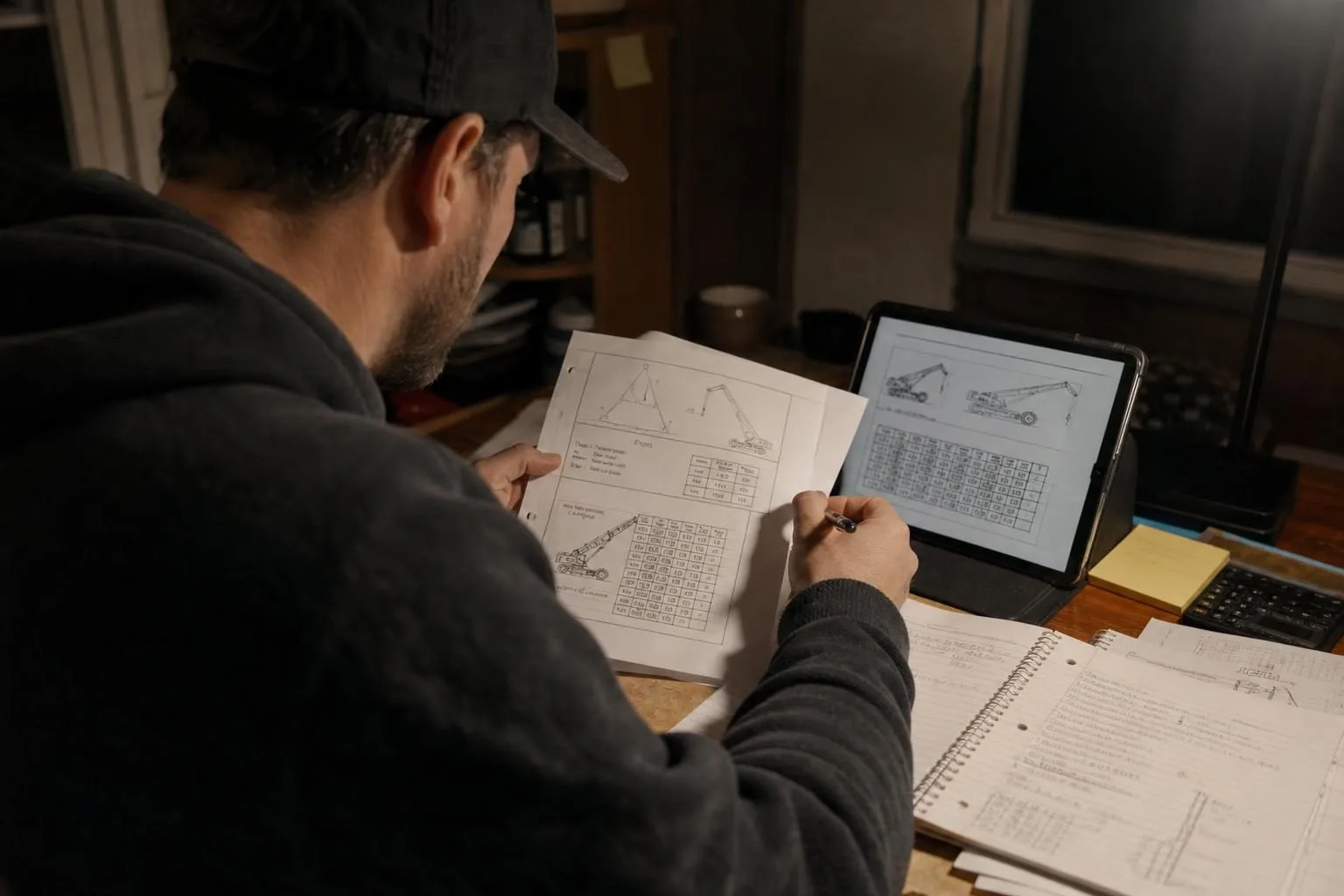
You can run the crane. You've made a hundred picks. Then you open a load chart...

...and it's a grid of numbers, a page of notes in small print and a range diagram full of lines. Which column? Which boom length? What do you subtract?

Capacity grid, range diagram and notes: the three parts of every load chart

Here the chart is one drawing of the crane: the radius measured from the center of rotation to the hook line, the boom length and angle, and the box where the gross capacity sits.

And on the pages next to it, each step gets its own page: the deductions, gross versus net, parts of line, the outrigger position and the range diagram.

First you see where every number comes from. Then the chart reads the same way every time.

SEE THE DIFFERENCE

Stop Guessing Which Number on the Chart Is Yours

THIS
  • Pages of chart notes in small print
  • Grids of numbers without a single drawing
  • On test day, you don't know which column to use
Rated lifting capacities shown are in pounds and do not exceed 85% of tipping loads on fully extended outriggers. Capacities above the bold line are based on structural strength; capacities below it are based on stability. Weights of hook blocks, hook balls, slings, spreader bars and all other load handling devices shall be considered part of the load and deducted from the rated capacity. Operating radius is the horizontal distance from the axis of rotation to the center of the vertical hoist line or block with the load applied. Do not interpolate between radii or boom lengths. Where no capacity is shown, operation is not intended or approved.
FOR THIS
  • Every chart step drawn on the crane
  • One topic per page, with the numbers in boxes
  • 8 load chart problems worked out line by line
Telescopic (TLL/TSS), lattice (LAT) and boom truck, side by side at the same scale.
CONTENTS

Take a Look at the 9 Parts and 81 Topics

Certification rules, crane parts, load charts step by step, worked problems, setup, signals and rigging, power lines, operations and exam practice: 86 pages, all illustrated

ICertification and OSHA Rules · pp. 6-14
  1. Why OSHA 1926.1427 requires certification
  2. The CCO path: Core, specialty and practical
  3. The 12-month window and 5-year recertification
  4. What your certification card covers
  5. The employer evaluation is a separate step
  6. Qualified vs competent person
  7. The Core written exam: 4 domains
  8. Specialty exams: TLL, TSS and LAT
  9. Part I review
IICrane Parts and Configurations · pp. 15-23
  1. Mobile crane types: telescopic, lattice, boom truck
  2. Swing cab vs fixed cab
  3. Carrier, upperstructure and counterweight
  4. Boom sections, jib and extensions
  5. Hoist, wire rope and hook block
  6. Safety devices: RCI/LMI, anti-two-block, level indicator
  7. Center of rotation and the tipping axis
  8. Quadrants of operation
  9. Part II review
IIILoad Charts Step by Step · pp. 24-39
  1. Anatomy of a load chart: read the notes first
  2. Radius: measured from the center of rotation
  3. Boom length and boom angle
  4. Finding the gross capacity
  5. Between two numbers: never interpolate
  6. Structural vs stability limits
  7. Deductions: hook block, ball, rigging, jib
  8. Gross vs net capacity
  9. Parts of line and line pull
  10. The range diagram: radius and tip height
  11. Outrigger position picks the chart
  12. Over the front, over the side, 360 degrees
  13. On rubber vs on outriggers
  14. Jib charts: offset, erected and stowed
  15. The 5-step chart routine
  16. Part III review
IVLoad Chart Problems Worked Out · pp. 40-48
  1. Problem 1: net capacity on outriggers
  2. Problem 2: radius between two columns
  3. Problem 3: boom length between two columns
  4. Problem 4: deductions with a stowed jib
  5. Problem 5: parts of line for a heavy lift
  6. Problem 6: maximum radius for a known load
  7. Problem 7: over the side vs over the front
  8. Problem 8: a lift on the jib
  9. Part IV review
VSetup, Ground and Stability · pp. 49-55
  1. Leveling the crane
  2. Outriggers: fully extended and set
  3. Ground conditions: OSHA 1926.1402
  4. Ground bearing pressure: force divided by area
  5. Mats and cribbing
  6. Why charts stop short of tipping
  7. Part V review
VISignals and Rigging Basics · pp. 56-63
  1. Hand signals (ASME B30.5) 1/2: hoist, lower, stop
  2. Hand signals 2/2: boom, swing, telescope, dog everything
  3. Voice signals and the qualified signal person
  4. Load weight and center of gravity
  5. Sling angle and sling tension
  6. Hitches: vertical, choker, basket
  7. Inspecting slings and hardware
  8. Part VI review
VIIPower Lines, Wind and Site Hazards · pp. 64-70
  1. Power lines: the 20-foot rule up to 350 kV
  2. Table A: clearance by voltage
  3. Encroachment prevention: spotter, markings, warning line
  4. If the crane contacts a power line
  5. Wind and weather
  6. Swing radius barricades and site control
  7. Part VII review
VIIIOperations and Inspections · pp. 71-79
  1. The lift plan and the pre-lift meeting
  2. Smooth control: hoist, boom and swing
  3. Two-blocking and how to prevent it
  4. Side loading and dragging
  5. Multiple-crane and personnel lifts
  6. Shift, monthly and annual inspections
  7. Wire rope: when to take it out of service
  8. Pick and carry
  9. Part VIII review
IXExam Practice · pp. 80-86
  1. How the written exams work
  2. Practice questions 1-5
  3. Practice questions 6-10
  4. Practice questions 11-15
  5. Practice questions 16-20
  6. Practice questions 21-25
  7. Practice questions 26-30

What If Every Topic Fit on a Single Page?

Picture this:

Instead of guessing whether the hook block counts against the capacity...

...you open the page and see the gross capacity, every deduction stacked under it and the net number you can actually lift, on one drawing.

Charts assume a level crane, commonly within 1 percent; tilt costs most at long radius.

And radius, boom angle, parts of line, outrigger setup, ground pressure, power line clearances and hand signals turn into drawings and tables you can read at a glance.

You stop memorizing and start understanding.

That's exactly what Crane Operator Made Visual does. It's not “just another manual.” It's 9 parts and 81 illustrated topics, 8 load chart problems worked out step by step, and at the end 30 exam-style questions with the answer, the explanation and the page to reread. Because seeing it in order makes it stick.

Because what your brain sees organized, it remembers.

Here Is What You Get with Crane Operator Made Visual:

Ipp. 6-14

Certification and OSHA Rules

What certification requires: why OSHA 1926.1427 calls for it, the Core, specialty and practical exams, the 12-month window, 5-year recertification and the employer evaluation.

IIpp. 15-23

Crane Parts and Configurations

The crane in one drawing: telescopic, lattice and boom truck, swing cab and fixed cab, boom, jib, hoist and hook block, the safety devices and the quadrants of operation.

IIIpp. 24-39

Load Charts Step by Step

Read any load chart in the same order: the notes first, radius, boom length and angle, gross capacity, why you never interpolate, deductions, gross vs net, parts of line, the range diagram, outrigger position, jib charts and a 5-step routine you repeat on every chart question.

IVpp. 40-48

Load Chart Problems Worked Out

8 load chart problems worked out line by line on generic training charts: net capacity, between two columns, stowed jib, parts of line, maximum radius, over the side and a lift on the jib.

Vpp. 49-55

Setup, Ground and Stability

Level the crane, set the outriggers, read the ground: OSHA's ground conditions rule, ground bearing pressure, mats and cribbing, and why the chart stops short of tipping.

VIpp. 56-63

Signals and Rigging Basics

The standard hand signals drawn one by one, voice signals and the qualified signal person, load weight and center of gravity, sling angles, hitches and inspecting rigging.

VIIpp. 64-70

Power Lines, Wind and Site Hazards

Power lines without guessing: the 20-foot rule, Table A clearances by voltage, encroachment prevention and what to do on contact, plus wind and site control.

VIIIpp. 71-79

Operations and Inspections

The lift plan, smooth control, two-blocking, side loading, multiple-crane and personnel lifts, shift, monthly and annual inspections, wire rope removal and pick and carry.

IXpp. 80-86

Exam Practice

How the written exams work, and 30 exam-style questions, each with the answer, the explanation and the page to reread.

At the end of the book: 8 load chart problems worked out step by step and 30 exam-style questions with the answer, the explanation and the page to reread.


And That Is Not All: 2 More Books, Free

Test Day & Certification Roadmap

BONUS 1: «Test Day & Certification Roadmap»

Value on its own: US$ 17.90

The path from today to your card: registering for the Core and the specialty written exams, scheduling a computer-based test, what to bring, the on-screen calculator and the load chart you get on test day, the 12-month window to pass the practical, and what renewal looks like every 5 years.

Illustrated Crane Glossary

BONUS 2: «Illustrated Crane Glossary»

Value on its own: US$ 14.90

The crane words the exams assume you know (radius, gross and net capacity, deductions, parts of line, two-blocking, RCI, outrigger float, cribbing, dog everything...), each with a small drawing and a plain-English definition.

Crane Operator Made Visual + 2 Free Books

  • Crane Operator Made Visual: 86 illustrated pagesUS$ 63
  • BONUS 1: Test Day & Certification RoadmapUS$ 17.90
  • BONUS 2: Illustrated Crane GlossaryUS$ 14.90
  • High-resolution PDF to printIncluded
Total value US$ 95.80
YOUR PRICE:
US$ 27
You save US$ 68.80
YES, I WANT CRANE OPERATOR MADE VISUAL FOR US$ 27

📄 This is a digital PDF book sent to your email: nothing is printed or shipped.

Secure purchaseEncrypted payment30-day guarantee

PDF by email: Crane Operator Made Visual reaches your inbox as a PDF, and the two free books come by email too. One-time payment, no installments or hidden costs.

Is This Book for You?

You're studying on your own

You're studying on your own

The Core and your specialty, one topic per page, to review in short sessions after a shift, with the load chart steps drawn out instead of buried in notes.

You're retaking a written exam

You're retaking a written exam

Go straight to the parts that tripped you up: load charts step by step, 8 problems worked out line by line, and 30 exam-style questions with the page to reread.

Your company is sending you to a class

Your company is sending you to a class

Show up having seen every topic once, and keep one reference to review the charts, signals and power line rules before test day.

To Sum Up: Here Is What You Get

US$ 95.80US$ 27
YES, I WANT CRANE OPERATOR MADE VISUAL FOR US$ 27

📄 This is a digital PDF book sent to your email: nothing is printed or shipped.

30DAYS
GUARANTEE

30-Day Guarantee

30-day guarantee: tell us what didn't work and we'll refund 100%.

You have 30 days to try Crane Operator Made Visual and the two bonus books. Tell us what didn't work for you and we'll refund 100% of what you paid. One-time payment, no subscription.

Frequently Asked Questions

How do I get the material?

You get Crane Operator Made Visual as a high-resolution PDF by email, at the address you enter at checkout. The two bonus books, Test Day & Certification Roadmap and Illustrated Crane Glossary, also come by email.

Is it a one-time payment or a subscription?

One-time payment of US$ 27. No installments and no subscription.

Who is it for?

For anyone preparing for the NCCCO Mobile Crane Operator written exams: the Core and a specialty (TLL, TSS or LAT), whether you're studying on your own, retaking an exam or heading into a prep class. Check the table of contents above to see the topics.

What is it based on?

OSHA 29 CFR 1926 Subpart CC (Cranes and Derricks in Construction), ASME B30.5 for mobile cranes and hand signals, and the published CCO exam outlines. The load charts in the book are generic training charts built to teach the method.

Is this official NCCCO material?

No. It's an independent study book, not affiliated with or endorsed by NCCCO, OSHA or any crane manufacturer. On test day you use the load chart and the on-screen calculator provided with the exam, and on the job you always use the manufacturer's load chart and manual for your crane.

Does it prepare me for the practical exam?

No. This book covers the written exams only. The practical exam is taken on a crane, and nothing replaces seat time and hands-on training with a qualified trainer.

Does it cover boom truck, articulating or service truck exams?

No. It covers the Mobile Crane Operator Core plus the TLL, TSS and LAT specialties. Other certifications have their own exams and load charts.

Are the practice questions the ones on the real exam?

No. The 30 questions are written for this book in the style of the written exams. They aren't official questions: they're there to train you, and each one tells you which page to reread.

Can I print it?

Yes. It's a high-resolution PDF: read it on your phone, tablet or computer, or print the pages you want to keep in your truck.

What if I don't like it?

You have 30 days. Tell us what didn't work and we'll refund 100% of what you paid.

One Last Thing Before You Decide...

You don't have to stare at a grid of numbers hoping the right column jumps out.

You don't have to guess what gets deducted from the capacity.

And you definitely don't have to walk into the exam not knowing where to start.

There's an easier way, and it's one click away.

One-time payment: US$ 27 · Guarantee: 30 days · PDF by email

YES, I WANT CRANE OPERATOR MADE VISUAL FOR US$ 27

📄 This is a digital PDF book sent to your email: nothing is printed or shipped.